In today’s fast-moving life, anxiety has become very common. Many people are living with constant worry, overthinking, fear of the future, emotional restlessness, sleep disturbance, and a feeling of heaviness in the chest or head. Sometimes the person may not even know why he or she is feeling anxious. The body feels tired, the mind feels overloaded, and the heart feels unsettled.
In Indian yogic tradition, anxiety is not seen only as a mental issue. It is understood as a disturbance of body, breath, prana, mind, emotions, lifestyle, and inner awareness. When the breath becomes irregular, the mind also becomes unstable. When the nervous system remains constantly alert, the body cannot relax. When the mind keeps running outward, inner peace slowly gets lost.
Yoga gives us a very beautiful and practical way to come back to balance. It does not suppress anxiety. It teaches us how to understand it, regulate it, breathe through it, relax the body, calm the nervous system, and reconnect with the deeper Self. Yoga is not just stretching or physical exercise. It is a complete science of living, healing, and inner transformation.
The ancient Indian masters understood very clearly that the mind and breath are deeply connected. If the breath is restless, the mind becomes restless. If the breath becomes slow and steady, the mind also starts becoming calm. This is why yoga practices like asana, pranayama, relaxation, meditation, and mindfulness are very helpful for anxiety relief.
Below are the 7 best yoga practices for anxiety relief. These practices are simple, safe for most beginners, and can be done regularly at home. However, if someone has severe anxiety, panic disorder, trauma, heart disease, high blood pressure, vertigo, pregnancy complications, or any serious medical condition, it is always better to practice under the guidance of a qualified yoga teacher.
1. Deep Yogic Breathing
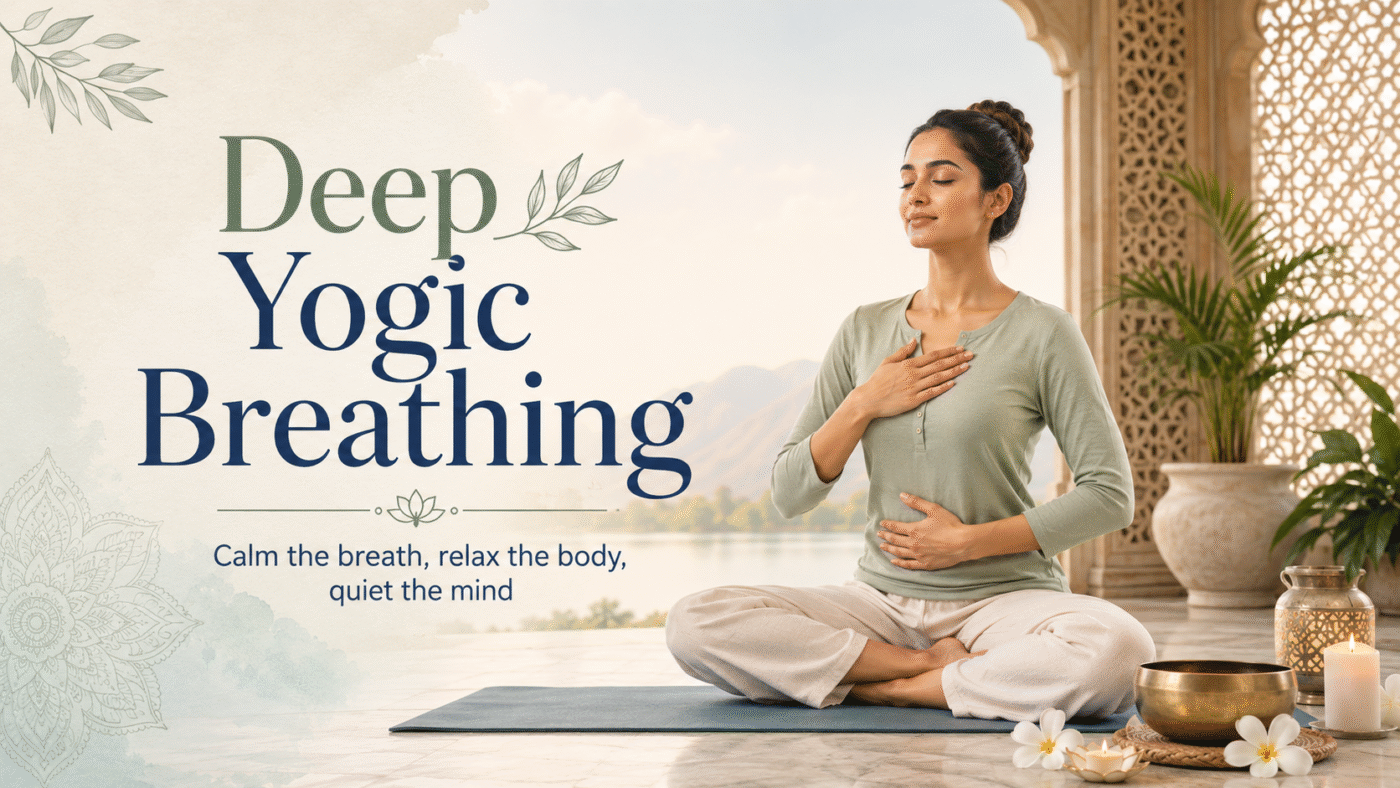
Deep Yogic Breathing is one of the most effective and simple practices for anxiety relief. In anxiety, the breathing pattern usually becomes shallow and fast. Many people breathe only from the upper chest, which keeps the body in a stress mode. This sends a message to the brain that something is wrong or unsafe.
Deep Yogic Breathing changes this message. When we breathe slowly and deeply, especially through the nose, the nervous system begins to calm down. The body receives a signal that it is safe. The heart rate slowly becomes balanced, the muscles begin to relax, and the mind starts becoming quiet.
To practice this, sit comfortably with your spine straight, or lie down on your back. Keep one hand on your abdomen and one hand on your chest. Slowly inhale through the nose and allow the abdomen to expand gently. Then allow the rib cage and chest to receive the breath. Now exhale slowly and completely, allowing the chest, ribs, and abdomen to relax.
Do not force the breath. Let it be natural, smooth, and comfortable. You may inhale for 4 counts and exhale for 6 counts. This slightly longer exhalation is very useful because it activates the relaxation response of the body.
Practice this for 5 to 10 minutes daily. It is very helpful in the morning, before sleep, before an important meeting, after emotional stress, or whenever the mind feels disturbed.
In the Indian yogic view, breath is not only oxygen. Breath is also connected with prana, the life-force energy. When the breath becomes balanced, prana becomes balanced. When prana becomes balanced, the mind becomes peaceful.
2. Nadi Shodhana Pranayama
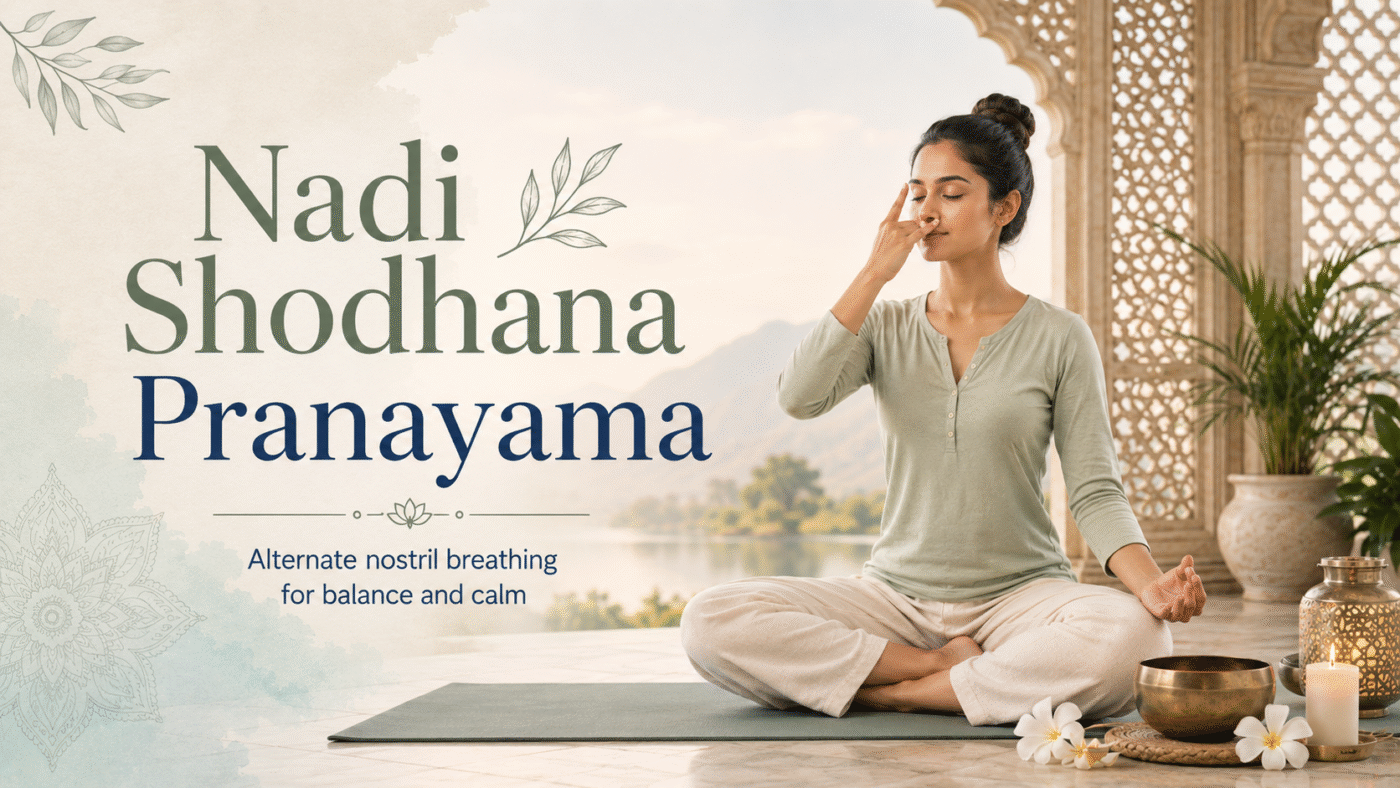
Nadi Shodhana Pranayama, also known as Alternate Nostril Breathing, is a very powerful practice for anxiety, stress, mental confusion, and emotional imbalance. “Nadi” means energy channel, and “Shodhana” means purification. This pranayama helps purify and balance the subtle energy channels of the body.
In yogic science, the left nostril is connected with Ida Nadi, which represents cooling, calming, lunar energy. The right nostril is connected with Pingala Nadi, which represents warming, active, solar energy. When these two energies are imbalanced, the mind may become restless, dull, fearful, or overactive. Nadi Shodhana helps bring both energies into harmony.
To practice, sit comfortably in Sukhasana, Vajrasana, or on a chair with the spine straight. Relax the shoulders and face. Use the right thumb to gently close the right nostril. Inhale slowly through the left nostril. Then close the left nostril with the ring finger, release the right nostril, and exhale through the right. Now inhale through the right nostril, close it, release the left nostril, and exhale through the left. This is one complete round.
Practice 5 to 10 rounds in the beginning. Keep the breath soft and silent. Do not hold the breath in the beginning if you are anxious, because retention may create pressure for some people. Once the mind and body become more stable, breath retention may be learned under the guidance of a competent teacher.
Nadi Shodhana is very useful before meditation, before sleep, before study, and after a stressful day. Students, professionals, teachers, healers, therapists, and spiritual practitioners can benefit greatly from this practice.
This pranayama is also helpful because it gives the mind something simple and rhythmic to follow. When the attention is placed on the breath and nostrils, overthinking naturally reduces.
3. Balasana: Child’s Pose
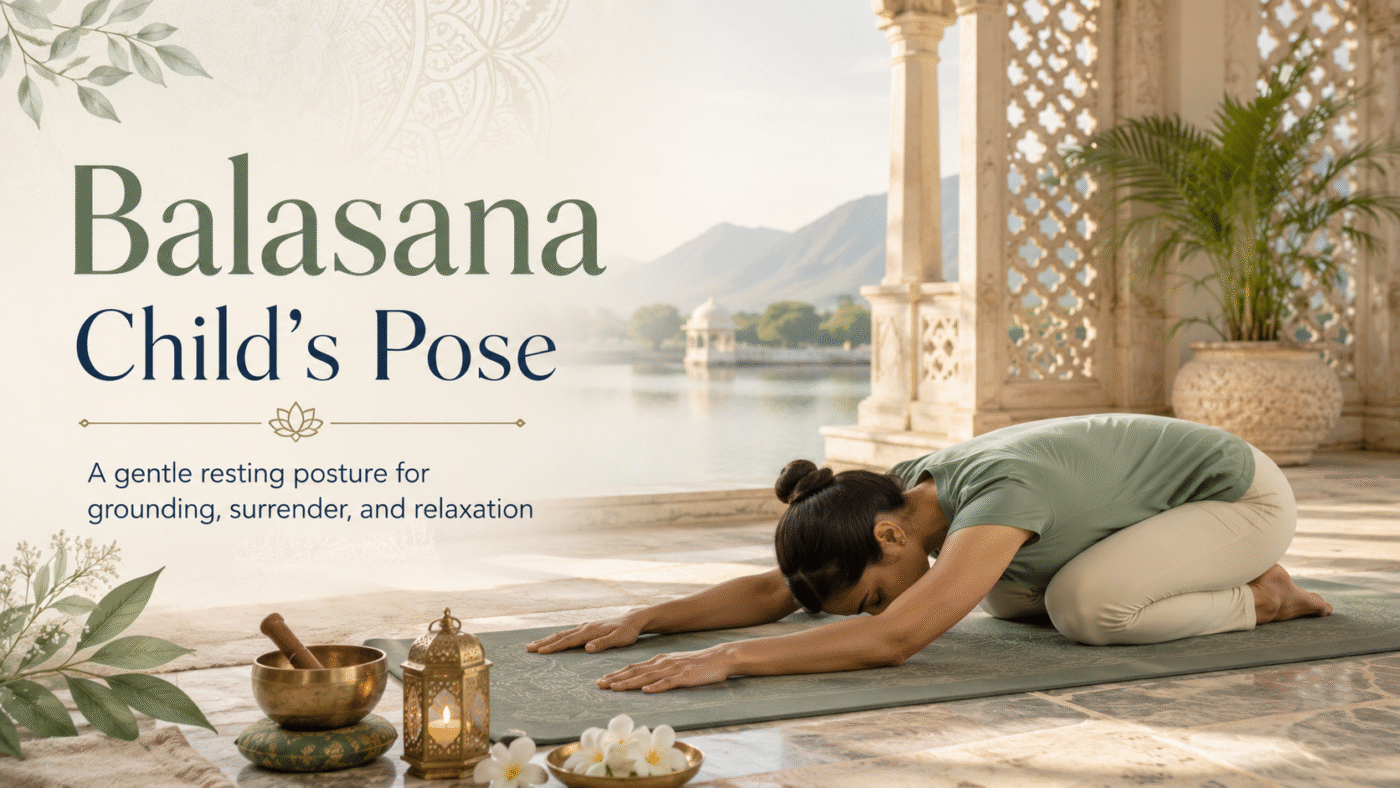
Balasana, or Child’s Pose, is one of the most comforting yoga postures for anxiety relief. Anxiety often creates a feeling of insecurity. The body feels alert, the shoulders become tight, the jaw may become stiff, and the chest may feel heavy. Balasana gives the body a sense of safety and surrender.
To practice Balasana, kneel on the mat. Keep the big toes together and knees either together or slightly apart. Slowly bend forward and rest your forehead on the floor. If the forehead does not touch the floor, place a cushion, folded blanket, or bolster under the head. Arms can be extended forward or kept beside the body.
Stay in this posture for 2 to 5 minutes. Breathe slowly. Allow the back body to expand with every inhalation and soften with every exhalation.
The beauty of Balasana is that it teaches surrender. In our normal life, anxiety makes us fight everything mentally. We fight thoughts, we fight emotions, we fight uncertainty. But Balasana teaches the body and mind to bow down, release control, and rest in trust.
You can mentally repeat while staying in this pose: “I am safe. I am protected. I allow myself to relax.”
This posture is especially helpful when you feel emotionally tired, mentally overloaded, or unable to sleep. It is also useful after difficult conversations or long screen exposure.
If there is knee pain, place a cushion between the thighs and calves. If there is pregnancy or abdominal discomfort, keep the knees wider and use support.
4. Marjariasana-Bitilasana: Cat-Cow Movement
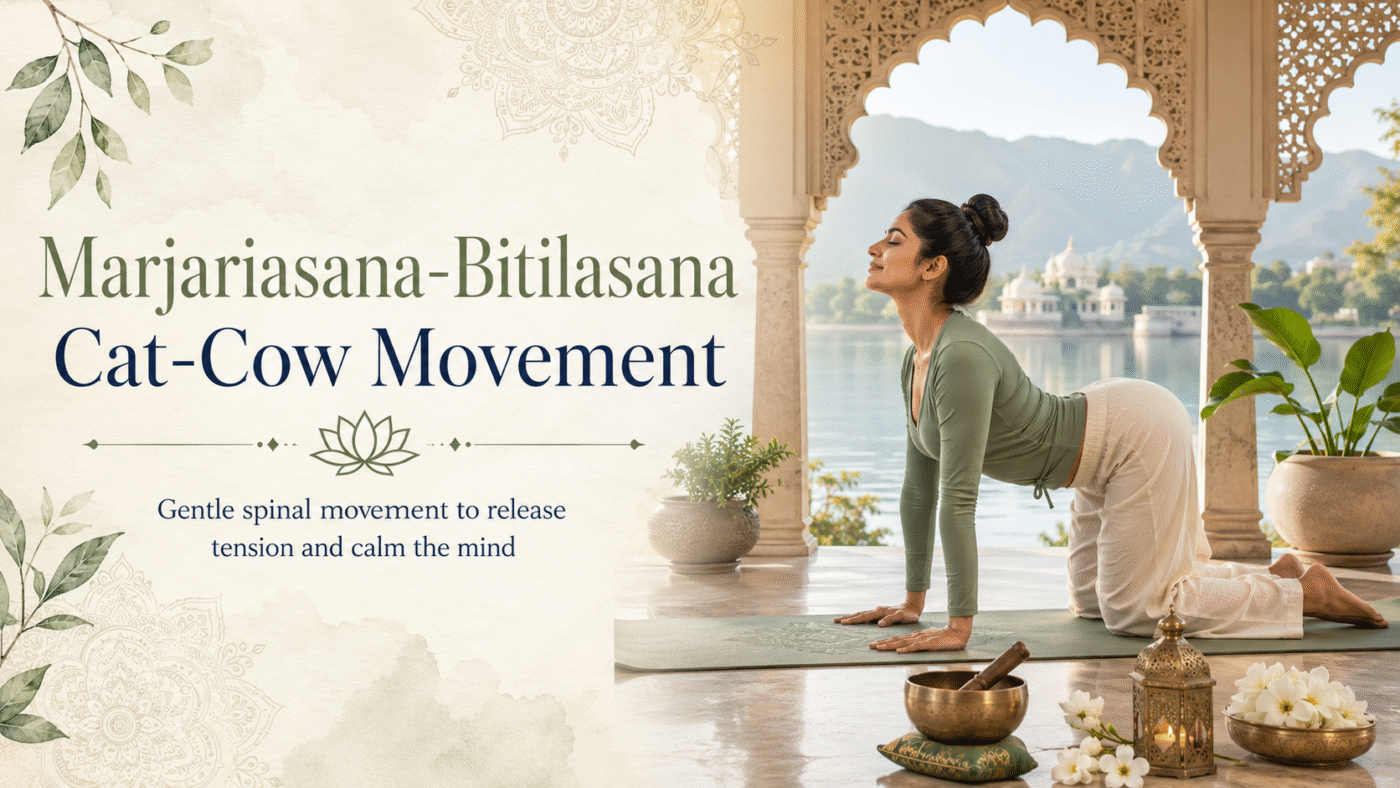
Marjariasana-Bitilasana, commonly called Cat-Cow movement, is a gentle movement of the spine coordinated with breath. It is very good for releasing tension from the back, shoulders, neck, and chest. Many people with anxiety hold stress in these areas without realizing it.
Come on your hands and knees. Keep the palms under the shoulders and knees under the hips. As you inhale, gently arch the back, lift the chest, and look slightly forward. This is Cow Pose. As you exhale, round the spine, bring the chin slightly toward the chest, and draw the abdomen inward. This is Cat Pose.
Move slowly with the breath. Do 10 to 20 rounds. Do not hurry. Let the breath guide the movement.
This practice is helpful because anxiety often takes us away from the body and into thoughts. Cat-Cow brings awareness back into the body. It reconnects the breath, spine, and mind. Slowly, the nervous system starts feeling grounded.
In traditional yoga, the spine is considered a very important channel for energy flow. A stiff spine often reflects stagnant energy and stress. Gentle spinal movement helps prana flow more freely and prepares the practitioner for deeper relaxation and meditation.
This practice is excellent in the morning, during office breaks, after long sitting, or before sleep. It is simple but very effective.
5. Gentle Forward Bends
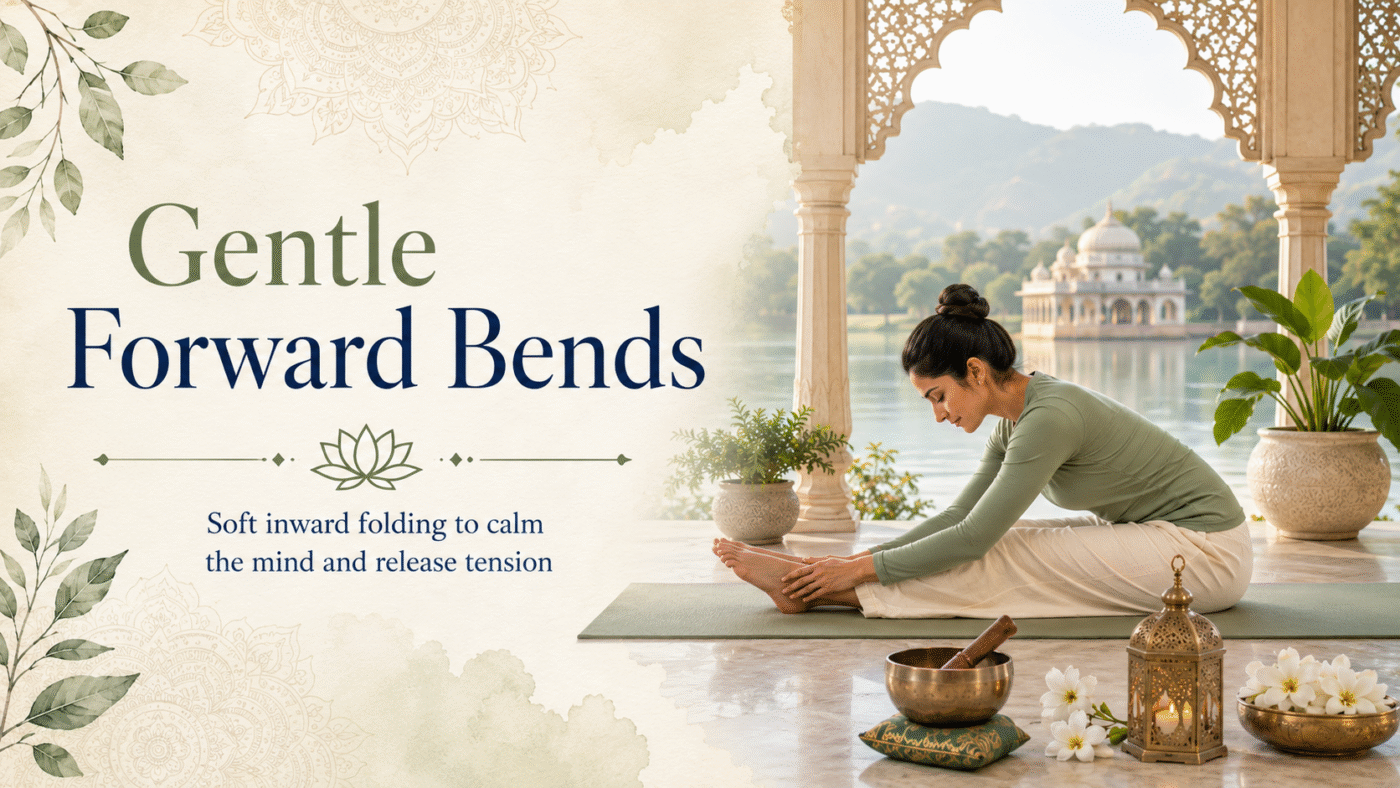
Forward bending postures are very calming for the mind. They naturally turn awareness inward and reduce external stimulation. When practiced gently, forward bends can help reduce anxiety, anger, mental heat, and emotional restlessness.
One simple practice is seated forward bend with support. Sit with the legs stretched forward. Keep a pillow or bolster on your thighs and gently fold forward. There is no need to touch the toes. Rest the head and chest on support and breathe slowly.
Another simple option is standing forward bend. Stand with the feet hip-width apart. Bend the knees slightly and fold forward from the hips. Let the head, neck, and shoulders relax. You may hold opposite elbows and gently sway.
The purpose here is not flexibility. The purpose is relaxation. Many people make the mistake of turning yoga into performance. For anxiety relief, yoga should not be aggressive or competitive. It should be gentle, mindful, and healing.
Stay in a supported forward bend for 1 to 3 minutes. Let every exhalation soften the body.
Forward bends give a feeling of humility and introspection. They reduce the habit of constantly looking outward and help the mind return to the inner space. This is very important because anxiety grows when the senses and thoughts keep running outside.
People with severe lower back pain, slipped disc, vertigo, or uncontrolled blood pressure should practice carefully and preferably under guidance.
6. Viparita Karani: Legs-Up-the-Wall Pose
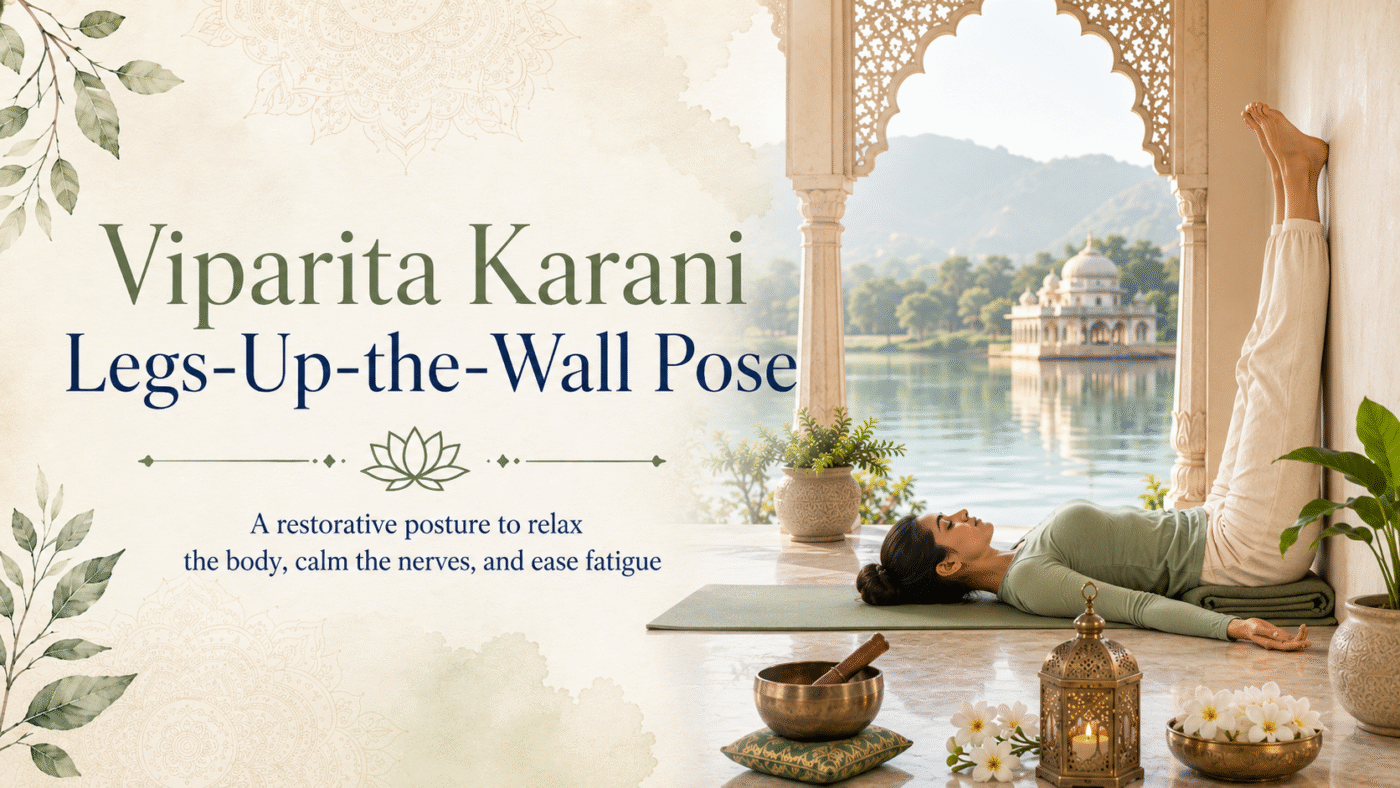
Viparita Karani, or Legs-Up-the-Wall Pose, is one of the best restorative yoga postures for anxiety and tiredness. It is very simple, yet deeply relaxing. It helps calm the nervous system, relax the legs, improve circulation, and prepare the body for sleep.
To practice, sit sideways near a wall. Slowly lie down and place both legs up the wall. Adjust the distance according to comfort. The hips may be close to the wall or slightly away. Keep the arms relaxed beside the body. Close the eyes.
Stay in this posture for 5 to 15 minutes. Breathe naturally. Let the body become heavy and relaxed.
Many people with anxiety feel tired but cannot rest. Viparita Karani is very useful for such people. It gives rest without effort. It is especially good in the evening after work, after travel, after standing for long hours, or before bedtime.
This posture is also helpful because it gently reverses the usual downward pressure of the body. The legs get rest, the mind becomes quieter, and the breath becomes naturally slower.
Do not practice this posture if it creates pressure in the head, dizziness, or discomfort. People with serious eye conditions, uncontrolled high blood pressure, severe neck problems, or advanced pregnancy should take proper guidance.
Viparita Karani teaches one of the most important lessons of yoga: healing does not always come by doing more. Sometimes healing comes by doing less, resting deeply, and allowing the body to return to balance.
7. Yoga Nidra and Mindfulness Meditation
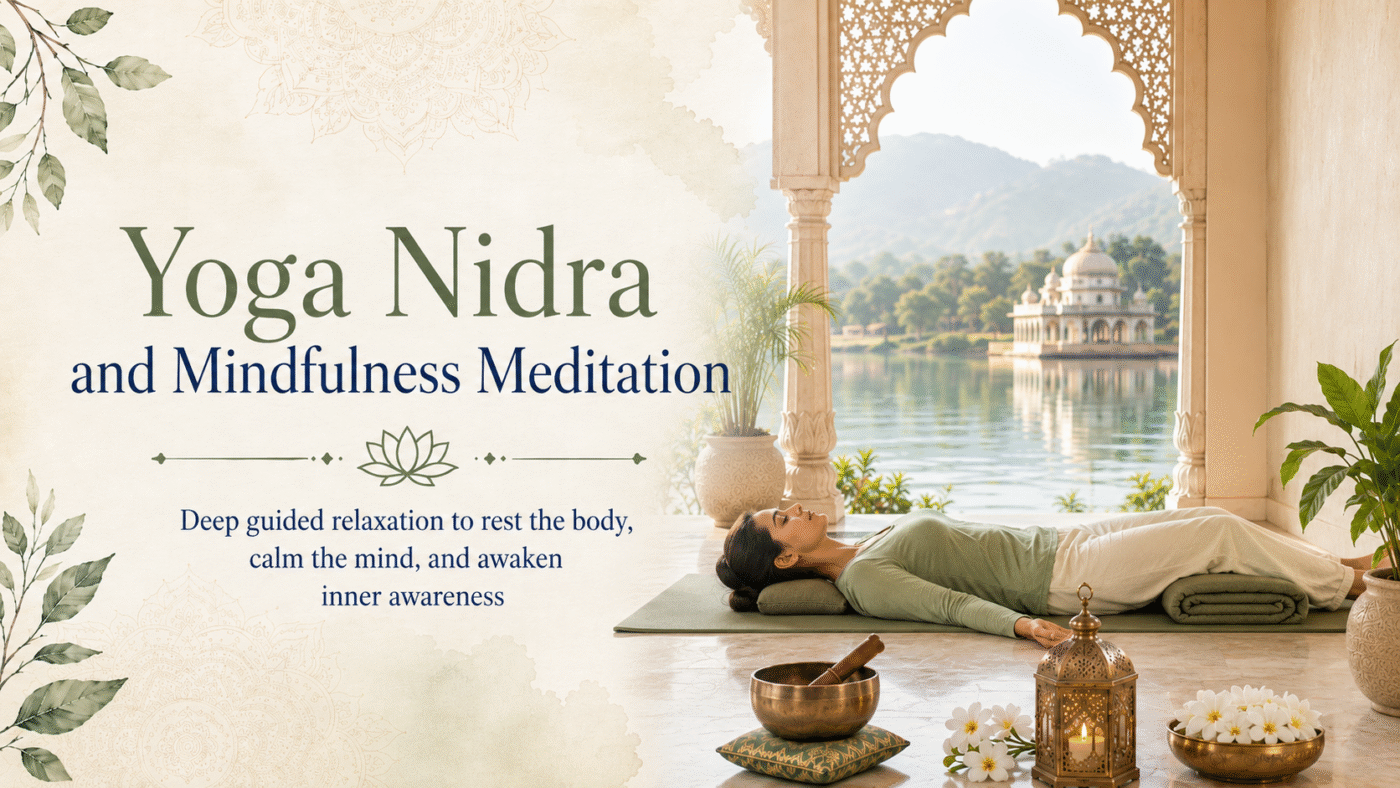
Yoga Nidra is a wonderful yogic practice for anxiety relief. It is often called yogic sleep, but actually it is a state between waking and sleeping. The body rests deeply, but awareness remains present. This practice helps release physical tension, emotional stress, subconscious fear, and mental fatigue.
To practice Yoga Nidra, lie down comfortably in Shavasana. Keep the legs slightly apart and arms relaxed. Use a blanket if needed. Close your eyes. Begin by observing the natural breath. Then move awareness slowly through different parts of the body: right hand, right arm, shoulder, face, chest, abdomen, legs, and so on. Allow each part to relax.
A guided Yoga Nidra session of 20 to 30 minutes can be very helpful for anxiety and sleep disturbance. It is especially useful for people who cannot meditate easily because of overthinking. Since Yoga Nidra is practiced lying down, the body relaxes first, and then the mind follows.
Mindfulness meditation is also very important. In mindfulness, we do not fight thoughts. We observe them. We do not suppress emotions. We witness them. Slowly, we learn that thoughts are not our true identity. Fear comes and goes. Worry comes and goes. Sensations come and go. But awareness remains.
To practice mindfulness, sit comfortably and observe the breath. When thoughts arise, gently notice, “thinking.” When emotions arise, notice, “feeling.” When sensations arise, notice, “sensation.” Then return to the breath.
This simple practice creates distance from anxiety. The person begins to understand, “I am not anxiety. Anxiety is only an experience arising in awareness.”
This understanding is very powerful. It changes our relationship with the mind.
A Simple Daily Yoga Routine for Anxiety Relief
If you want to follow a practical routine, you may begin with this simple 20 to 30 minute sequence.
Start with 3 minutes of Deep Yogic Breathing. Then practice 10 rounds of Cat-Cow movement. Rest in Balasana for 2 to 3 minutes. Practice a supported forward bend for 2 minutes. Then lie in Viparita Karani for 5 to 10 minutes. After that, sit and practice 5 to 10 rounds of Nadi Shodhana. Finally, end with 5 minutes of mindfulness meditation or Yoga Nidra-style body relaxation.
Practice this daily for at least 21 days. Do not expect magic in one day. Yoga works gradually, deeply, and naturally. With regular practice, the body becomes more relaxed, the breath becomes smoother, and the mind becomes less reactive.
Lifestyle Tips Along with Yoga
Yoga practice becomes more effective when lifestyle is also balanced. Try to reduce excessive screen time, especially before sleep. Avoid too much caffeine if it increases restlessness. Eat fresh, sattvic, and light food as much as possible. Walk daily in fresh air. Spend some time in silence. Avoid unnecessary arguments and overstimulation. Keep a regular sleep routine.
In Indian tradition, anxiety is also connected with disturbed ahara, vihara, achara, and vichara — food, lifestyle, conduct, and thought pattern. Therefore, healing should be holistic.
Journaling can also help. Every night, write down three things: what disturbed me today, what I learned from it, and what I am grateful for. This simple practice brings clarity and emotional release.
Learn Yoga More Deeply with Adwait Yoga School
If you wish to learn yoga systematically and deeply, especially from the traditional Indian yogic perspective, you may explore the Yoga Teacher Training Courses offered by Adwait Yoga School.
Adwait Yoga School offers Yoga Teacher Training Courses in 50-hour, 100-hour, 200-hour, 300-hour, and 500-hour formats. These programs include important components of yoga such as Asana, Pranayama, Bandha, Mudra, Kriya, Meditation, Yoga Philosophy, and other traditional aspects of yogic learning. The courses are suitable for sincere seekers, yoga students, and those who wish to become qualified yoga teachers.
You can visit the Yoga Teacher Training Course page here:
Through proper training, one does not only learn postures, but also understands the deeper purpose of yoga — self-discipline, inner purification, awareness, emotional balance, and spiritual growth.
Conclusion
Anxiety is not a weakness. It is a sign that the body, mind, and nervous system need care, balance, and deeper awareness. Yoga gives us a gentle but powerful path to come back to ourselves.
The seven practices shared here — Deep Yogic Breathing, Nadi Shodhana Pranayama, Balasana, Cat-Cow movement, Gentle Forward Bends, Viparita Karani, and Yoga Nidra with Mindfulness Meditation — can bring great support when practiced regularly.
The most important thing is not perfection. The most important thing is consistency. Even 20 minutes of daily yoga practice can slowly transform the quality of your breath, thoughts, emotions, sleep, and inner strength.
Yoga reminds us that peace is not somewhere outside. It is already within us. We only need to remove the restlessness covering it. With breath, awareness, discipline, and surrender, the mind becomes calm and the heart becomes lighter.
Whenever anxiety comes, do not fight with it. Pause. Sit quietly. Breathe slowly. Relax the body. Observe the mind. Come back to the present moment.
This is the beginning of healing.
This is the gift of yoga.