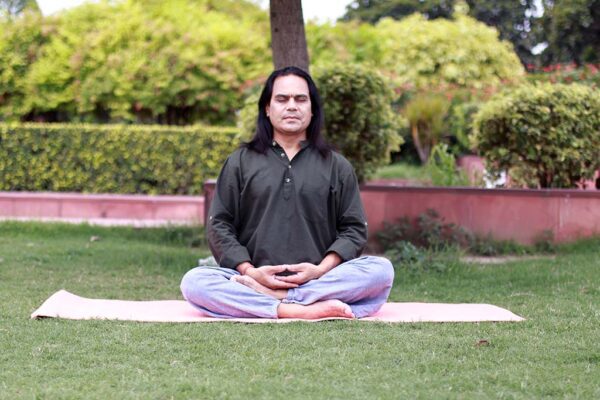

Kundalini practice is one of the most powerful and sacred paths in the Indian yogic tradition. It deals with the awakening of inner energy, purification of the subtle body, activation of chakras, deep meditation, and expansion of consciousness. But Kundalini should never be approached in a hurried, forceful, or careless way. It needs preparation, grounding, purity, discipline, and correct guidance.
Among all the supportive practices for Kundalini awakening, yogic breathwork holds a very important place. In Sanskrit, breathwork is usually understood through the word Pranayama. Prana means life-force energy, and ayama means expansion, regulation, or extension. So Pranayama is not merely breathing exercise. It is the conscious regulation and expansion of life-force energy.
In ordinary life, we breathe unconsciously. The breath changes according to emotions, thoughts, stress, food, sleep, and lifestyle. When we are angry, the breath becomes heated and disturbed. When we are anxious, the breath becomes shallow. When we are peaceful, the breath becomes smooth and rhythmic. The breath is always connected with the mind and prana.
In Kundalini practice, this connection becomes even more important. Kundalini is not awakened properly by imagination alone. The body, breath, mind, prana, nadis, and chakras must gradually become ready. Yogic breathwork prepares this inner field. It purifies the nadis, balances the nervous system, steadies the mind, supports chakra awareness, and creates the right condition for Kundalini energy to rise safely and naturally.
Understanding Kundalini and Prana
Kundalini is described in the yogic and tantric tradition as dormant spiritual energy resting at the base of the spine, in Muladhara Chakra. It is symbolized as a coiled serpent because it represents latent power, hidden consciousness, and the unawakened spiritual potential within us.
Prana, on the other hand, is the life-force that flows through the whole body and subtle system. It moves through nadis, or subtle channels. Traditional yoga speaks of many nadis, but three are especially important: Ida, Pingala, and Sushumna.
Ida is connected with the cooling, lunar, calming, and mental aspect. Pingala is connected with the heating, solar, active, and vital aspect. Sushumna is the central channel, through which Kundalini rises when the system becomes purified and balanced.
If Ida and Pingala are disturbed, the mind and energy remain imbalanced. If the nadis are blocked by stress, impurities, emotional disturbance, wrong lifestyle, or uncontrolled desire, Kundalini practice may not become stable. Breathwork helps balance Ida and Pingala and gradually prepares the Sushumna pathway.
This is why traditional yogis gave so much importance to Pranayama before deeper meditation and Kundalini sadhana.
Breath is the Bridge Between Body, Mind, and Energy
The breath is unique because it belongs to both the body and the mind. It happens automatically, but we can also consciously regulate it. This makes breath a bridge between the conscious and unconscious system.
When the mind is restless, the breath becomes restless. But when we consciously slow down and refine the breath, the mind also starts becoming steady. This is why yogic breathwork is powerful. It gives us direct access to the mind through the body.
In Kundalini practice, if the mind is scattered, the energy becomes scattered. If the breath is irregular, prana also becomes irregular. If prana is irregular, deeper meditation becomes difficult. But when breath becomes smooth, deep, and conscious, prana becomes organized. When prana becomes organized, the mind becomes calm. When the mind becomes calm, Kundalini practice becomes safer and deeper.
Breath is not only oxygen. In yogic understanding, breath carries prana. Every conscious inhalation brings energy. Every conscious exhalation releases heaviness. When this is practiced with awareness, the practitioner begins to feel inner movement, subtle vibration, warmth, calmness, and concentration.
How Breathwork Purifies the Nadis
Nadi purification is one of the most important purposes of Pranayama. Nadis are subtle channels through which prana flows. When these channels are blocked or imbalanced, the mind becomes disturbed and energy cannot move freely.
Nadi Shodhana Pranayama, or alternate nostril breathing, is especially important for Kundalini practice. It balances Ida and Pingala, calms the mind, harmonizes the nervous system, and prepares the central channel.
When practiced regularly and gently, Nadi Shodhana can reduce mental restlessness and create inner balance. It helps the practitioner become more centered. This is very necessary before any higher Kundalini practice because unbalanced energy may create agitation, emotional instability, or excessive heat.
In the traditional path, a seeker does not jump directly into forceful Kundalini techniques. First, the body and nadis are purified through asana, shatkarma, pranayama, mantra, discipline, sattvic diet, and meditation. Only then deeper energy practices become fruitful.
Breathwork and the Nervous System
Modern science gives another useful way to understand why breathwork supports Kundalini practice. The breath is closely connected with the nervous system. Slow, steady, and mindful breathing can activate the parasympathetic nervous system, which supports rest, recovery, emotional regulation, and calmness.
Many people who try Kundalini practices without preparation may become overstimulated. They may feel heat, shaking, emotional waves, anxiety, sleeplessness, or mental disturbance. Sometimes this happens because the nervous system is not ready to process higher energy.
Yogic breathwork gradually builds capacity. It teaches the nervous system how to remain calm while energy increases. It creates a container for pranic movement.
For example, if a person practices only intense activation but does not practice grounding breathwork, the energy may move upward without stability. But when breathwork is balanced, the practitioner can experience energy without fear. The breath becomes an anchor.
This is why in Kundalini practice, calming pranayama is as important as activating pranayama.
Important Pranayama Practices for Kundalini Support
There are many pranayama practices, but not all are suitable for everyone at the same stage. Kundalini practitioners should begin with gentle, balancing practices and proceed gradually.
Deep Yogic Breathing is the foundation. It involves slow breathing using the abdomen, ribs, and chest in a relaxed way. It calms the nervous system and increases awareness of the body.
Nadi Shodhana is one of the safest and most important practices. It balances left and right energy channels and prepares the mind for meditation.
Bhramari Pranayama, or humming bee breath, is very useful for calming the mind, reducing anxiety, and bringing awareness inward. The vibration of humming can also support Ajna Chakra and inner silence.
Ujjayi Pranayama may help create warmth, focus, and pranic awareness when practiced correctly. It should be gentle, not forceful.
Kapalabhati and Bhastrika are more activating practices. They can increase heat and stimulate energy. However, they should be practiced only under proper guidance, especially for Kundalini seekers. People with high blood pressure, heart problems, anxiety, pregnancy, epilepsy, or certain medical conditions should avoid forceful pranayama unless advised by a qualified teacher and healthcare professional.
Kumbhaka, or breath retention, is powerful but should never be practiced casually. Retention affects prana, mind, pressure, and nervous system deeply. It should be learned gradually and traditionally.
Breathwork and Chakra Activation
Each chakra is connected with certain patterns of energy, emotion, and awareness. Breathwork helps bring prana to these centers.
When breathing becomes deep and conscious, Muladhara becomes more grounded. This helps the practitioner feel stable and safe.
When breath softens around the lower abdomen, Swadhisthana becomes more fluid, supporting emotional release and creativity.
When breathing strengthens the navel area, Manipura becomes more active, supporting willpower, discipline, and inner fire.
When breath expands the chest, Anahata opens toward love, compassion, forgiveness, and devotion.
When breath awareness reaches the throat, Vishuddha becomes more refined, supporting expression and purification.
When breath becomes subtle and meditative, Ajna becomes steady, supporting concentration, intuition, and inner seeing.
When breath naturally becomes very fine during deep meditation, awareness may move toward Sahasrara, supporting spaciousness and higher consciousness.
But it is important to remember that chakra activation should not be forced. Breathwork should support natural awakening, not create artificial pressure.
Breathwork Helps Release Emotional Blocks
Kundalini practice often brings stored emotions to the surface. Fear, grief, anger, shame, attachment, or old memories may arise during energy work. Breathwork helps these emotions move safely.
When emotions are suppressed, the breath often becomes blocked. A person may hold the breath unconsciously during fear or pain. Over time, this creates tension in the body and nervous system. Conscious breathing gives permission to release.
Slow exhalation is especially useful. It tells the body that it is safe to let go. Bhramari can soften emotional heaviness. Nadi Shodhana can balance emotional extremes. Deep belly breathing can ground fear.
In Kundalini practice, emotional release should be handled with care. Breathwork should not be used to force catharsis. It should support gentle awareness. If someone has deep trauma, strong emotional instability, or panic tendency, they should practice under professional guidance.
Breathwork Builds Inner Witnessing
Kundalini awakening can bring many experiences: vibrations, spontaneous movements, visions, heat, tears, laughter, silence, bliss, or fear. Without witnessing awareness, a practitioner may become attached, frightened, or confused.
Breathwork builds the witness. When we observe the breath, we learn to observe without reacting. We watch inhalation, exhalation, pauses, sensations, and mental changes. This training becomes very helpful when Kundalini energy moves.
Instead of thinking, “What is happening to me?” the practitioner learns to observe calmly: “Energy is moving.” “Heat is present.” “Emotion is arising.” “Breath is changing.” This witnessing makes the process safer and more spiritual.
In Yoga, the witness attitude is very important. Energy without awareness may become restless. Awareness without energy may remain dry. Breathwork unites both.
Breathwork and Sushumna Awakening
One of the deeper aims of Kundalini practice is to prepare Sushumna Nadi. When Ida and Pingala are balanced, prana can enter Sushumna. This is the inner pathway of higher meditation and Kundalini ascent.
In daily life, most people are dominated by either mental restlessness or physical activity, either Ida or Pingala imbalance. Alternate nostril breathing helps harmonize these two currents. When balance becomes deeper, the mind naturally becomes still. At such times, meditation becomes more natural.
Many practitioners notice that after good pranayama, meditation becomes deeper. Thoughts reduce. The spine feels more alive. Breath becomes subtle. Awareness becomes centered. This is the beginning of Sushumna-oriented practice.
But again, this should not be rushed. Sushumna awakening is not a mechanical technique. It is the result of purification, balance, grace, and consistent sadhana.
The Danger of Forceful Breathwork in Kundalini Practice
In recent times, many people try strong breathwork from videos or workshops without proper preparation. This can be risky, especially for Kundalini practice. Forceful breathing can create excessive heat, dizziness, emotional flooding, anxiety, headache, pressure in the head, or sleep disturbance.
The traditional yogic approach is gradual. First learn posture. Then learn relaxation. Then learn natural breath awareness. Then deepen into basic pranayama. Then proceed toward advanced practices only under guidance.
Kundalini energy should be awakened like a lamp, not like an explosion. A lamp gives steady light. An explosion creates disturbance.
A sincere practitioner should avoid greed for experiences. Strong sensations are not always spiritual progress. Sometimes they are only nervous system overload. True progress is seen in calmness, humility, discipline, compassion, clarity, and stability.
Breathwork, Mantra, and Bandha
In Kundalini Yoga, breathwork is often combined with mantra, mudra, and bandha. These practices work together to guide prana.
Mantra gives direction to the mind. It purifies mental vibrations and creates sacred rhythm. When breath and mantra are synchronized, the mind becomes absorbed more easily.
Mudra creates subtle energetic circuits in the body. Hand gestures, eye focus, and body positions can direct prana in particular ways.
Bandha means energetic lock. Mula Bandha, Uddiyana Bandha, and Jalandhara Bandha are important in advanced pranayama and Kundalini practice. They help direct prana upward and stabilize energy. But bandhas should be learned carefully from a qualified teacher, because wrong practice can create strain.
When breath, mantra, mudra, bandha, and meditation are practiced properly, they create a complete inner technology for Kundalini sadhana.
Breathwork for Grounding After Kundalini Practice
After Kundalini practice, grounding is essential. Sometimes energy becomes very active or moves upward strongly. Grounding breathwork helps bring balance.
Slow abdominal breathing is very useful. Lengthening the exhalation helps calm the nervous system. Sitting quietly with awareness at the lower abdomen or feet can help. Gentle walking with breath awareness is also grounding.
One may also practice simple exhalation-focused breathing: inhale naturally and exhale slowly, without strain. This helps settle energy.
Grounding should not be ignored. Spiritual awakening is not only upward movement. It is also integration into the body, emotions, relationships, and daily life.
Signs Breathwork is Supporting Kundalini Properly
When breathwork is supporting Kundalini practice correctly, certain healthy signs may appear. The mind becomes calmer. The breath becomes smoother. The body feels grounded. Meditation becomes easier. Emotional reactions reduce. Awareness increases. The practitioner becomes more disciplined and compassionate.
There may also be subtle energetic sensations, but they are not the main sign. The main sign is balance.
If the practice creates anxiety, pressure, excessive heat, irritability, insomnia, confusion, or emotional instability, then the method may be too intense or not suitable at that time. The practitioner should slow down and seek guidance.
Yoga is not a competition. Kundalini practice is a sacred journey. It requires patience and wisdom.
Learn Kundalini Yoga with Adwait Yoga School
Those who wish to learn Kundalini Yoga systematically can explore the Kundalini Yoga Teacher Training Course offered by Adwait Yoga School.
Adwait Yoga School offers Kundalini Yoga Teacher Training Courses in different formats, including 50 hour, 100 hour, 200 hour, 300 hour, and 500 hour Kundalini Yoga Teacher Training programs. The school’s Kundalini Yoga Teacher Training page describes the 300-hour course as an advanced Kundalini Yoga training program done after completing 200-hour Kundalini Yoga training topics, with 6 weeks’ duration, Monday-to-Saturday classes, and a listed fee of INR 70,000. It also describes the 500-hour course as a complete Kundalini Yoga Teacher Training Program in India, starting from scratch and covering beginner, intermediate, and advanced levels over 10 weeks.
You can visit the Kundalini Yoga Teacher Training Course page here:
Learning Kundalini Yoga through a structured course is very important because the practice involves prana, chakras, nadis, breathwork, bandhas, kriyas, meditation, and subtle energy. A qualified teacher can guide students according to their level, health, emotional condition, and spiritual readiness.
For serious seekers, a proper teacher training course gives not only techniques but also discipline, philosophy, safety, sequencing, and teaching methodology.
Safety Guidelines for Breathwork and Kundalini
Kundalini practice should always be done with care. People with high blood pressure, heart disease, epilepsy, severe anxiety, panic disorder, psychosis, pregnancy, recent surgery, or serious medical conditions should avoid intense breathwork unless guided by a qualified professional.
Never practice strong pranayama immediately after heavy food. Do not force breath retention. Do not compete with others. Do not practice advanced techniques from random videos. If dizziness, chest discomfort, panic, severe headache, or confusion occurs, stop and rest.
The safest approach is gradual practice under guidance. Begin with breath awareness, deep yogic breathing, Nadi Shodhana, and Bhramari. Build stability first. Let Kundalini practice unfold naturally.
Conclusion
Yogic breathwork supports Kundalini practice because breath is the bridge between body, mind, and prana. When breath becomes conscious, prana becomes balanced. When prana becomes balanced, the mind becomes steady. When the mind becomes steady, Kundalini practice becomes safer, deeper, and more transformative.
Breathwork purifies nadis, balances Ida and Pingala, prepares Sushumna, calms the nervous system, supports chakra awareness, releases emotional blocks, and builds the witness consciousness needed for Kundalini awakening.
But breathwork must be practiced wisely. Forceful methods can disturb the system if done without preparation. The yogic path teaches patience, purity, grounding, and guidance. Kundalini energy is sacred. It should be awakened with reverence, not excitement.
The aim of Kundalini practice is not dramatic experience. The real aim is awakening, purification, self-realization, compassion, inner freedom, and union with higher consciousness.
When breath becomes refined, the mind becomes silent. When the mind becomes silent, prana enters deeper pathways. When prana becomes pure, Kundalini begins to rise naturally. And when Kundalini rises with awareness and guidance, the seeker moves from ordinary consciousness toward the light of inner awakening.